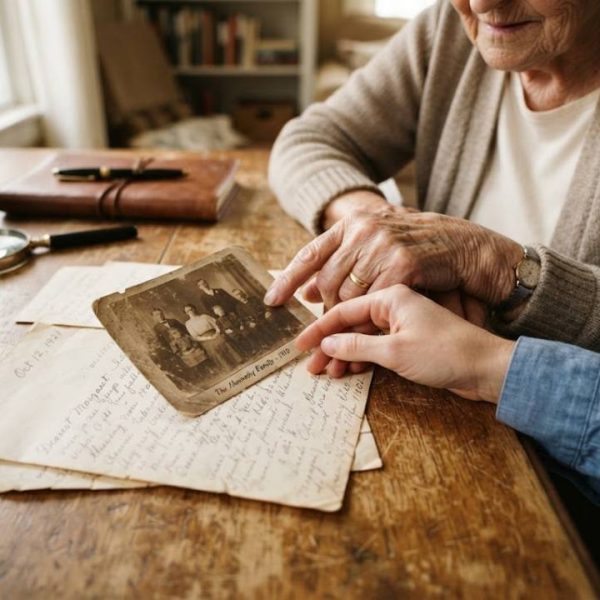
Tracing a family tree sounds like a quiet hobby until the first record arrives in a language nobody at home can read. A baptism entry from a village parish or a handwritten civil register or an old passport application can hold the one detail that connects two branches of a family. Without a careful translation that detail stays out of reach. Many researchers stall at exactly this point because they assume the next step is guesswork and not a professional process with clear rules and predictable results.
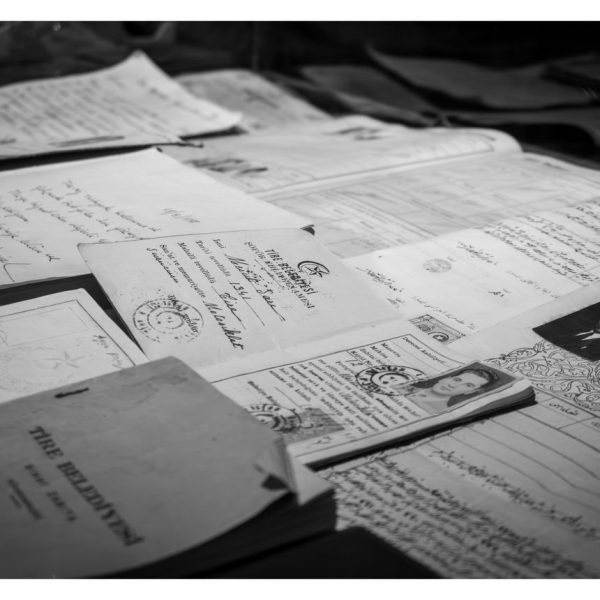
Old records pose problems that modern documents do not. Handwriting changes from one clerk to the next and spelling of names is rarely consistent. Place names change with borders and a village that appears under one name in a nineteenth century record may carry another name today. Abbreviations that every clerk understood at the time now look like random marks. A translator who knows the period and the administrative habits of the region can read these signs and explain them instead of simply copying letters.
Many family researchers also run into official paperwork rather than historical curiosities. An inheritance claim or a citizenship application or a request for a corrected birth record all depend on documents that must be accepted by an authority. In those cases a loose translation helps nobody. The office reading the file wants to see that the text is complete and that the person responsible for it can be identified. Casual help from a bilingual relative often falls short of that standard.
Names deserve special attention in every language. A surname may be spelled several ways across generations and a first name may appear in a local form on one record and a different form on another. A translator should record each variant exactly as it appears and add a clear note instead of silently choosing the most familiar spelling. That discipline protects the research because the next archive search will need the original forms to find matching entries.
Dates and numbers are another trap. Some regions used a different calendar during parts of their history and many registers write dates in an order that surprises modern readers. A misread digit can move a birth by a decade or break the link between a parent and a child. Experienced translators double check every figure against the original and mark anything that is unclear so the researcher knows exactly where confirmation from a second source would be wise.
When A Family Story Leads To Poland
A large number of families in the English speaking world have roots in Central Europe and many of them eventually need polish translation services to read church books and civil records or letters kept in a drawer for decades. Polish documents carry grammatical endings and regional spellings that change the look of a name from one entry to the next. A translator familiar with those patterns helps the researcher recognize the same person across several records.
The same translator can explain the context around the words. Why a certain parish kept the register and what a specific title meant and how a legal term from a past administration should be understood today are questions that a dictionary cannot answer. Good notes turn a plain translation into a working tool that the researcher can use when contacting archives or distant relatives or an official office that asks for clarification.
Documents That Must Stand Up In Court Or At An Office
Some records move from the family album into a formal procedure. Wills and property deeds and court decisions require precise legal translations because a single misread clause can change who inherits or who owns a plot of land. Legal vocabulary rarely maps one to one across systems and a translator must choose terms that preserve the function of each clause instead of its surface appearance.
Anyone preparing such a file should ask the provider how the translation will be certified and whether the authority involved accepts that form of certification. Asking early prevents the painful situation where a finished translation is rejected on a technicality. It also helps to keep a clean copy of every original and to number the pages so the translation can refer to each one without ambiguity.
What Economic Research Says About Migration And Records
Studies published by the OECD describe how international migration has shaped the population of many countries and how families keep ties across borders for generations. Those ties often survive in documents and the ability to read them gives descendants a concrete link to places their ancestors left behind.
Analysts connected to the International Monetary Fund have also written about remittances and cross border family finances which show how closely daily life in different countries can be linked. When money or property is involved the paperwork behind it needs accurate translation so that agreements and entitlements are understood the same way on both sides.
A Practical Way To Start A Translation Project
Begin by gathering every record into a single folder and photographing each page in good light. Write a short list of the questions the research is trying to answer so the translator knows what matters most. Group documents by family branch and by type so the work can be planned sensibly. A clear brief saves time and often reduces the final cost of the project.
Ask for a translation that keeps the original layout where possible and includes notes on unclear words and alternative spellings. Review the result with the original beside it and check names and dates one by one. Keep a log of what each document revealed so that later findings can be tested against earlier ones. A well kept log is often the difference between a scattered pile of papers and a coherent family history.
Researchers who treat translation as part of the investigation rather than an obstacle tend to uncover far more than they expected. Each translated page opens a door to another archive or another relative or another question worth asking. Anyone holding an unread document today would do well to take the first step now and seek qualified help so that the story it contains is not lost for another generation.